
Our strategic storytelling services
Build bridges between your vision and your audience's understanding - using visual storytelling.
As Scriberia’s Director of Storytelling, you’d expect me to be pretty invested in the idea that stories are the best way to communicate important things. Whether writing for newspaper readers or scripting explainer animations, I’ve always believed in the power of story to deliver a message.
At Scriberia, we set ourselves apart as masters of visual storytelling. It’s often said that human brains seek out stories in information — and that we comprehend images far faster than text. On the surface, it makes visual storytelling a compelling offer for organisations with something important to say.
But I wanted to dig deeper. What is it, neurologically, that makes storytelling — and visual storytelling in particular — so effective? How does the brain respond to story stimuli? And are we really doubling down on the neurochemical returns when we make stories visual?
What I discovered was, of course, a story.
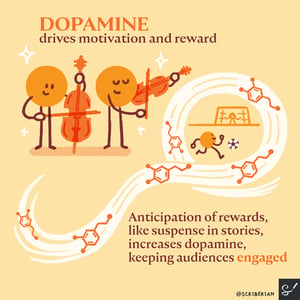
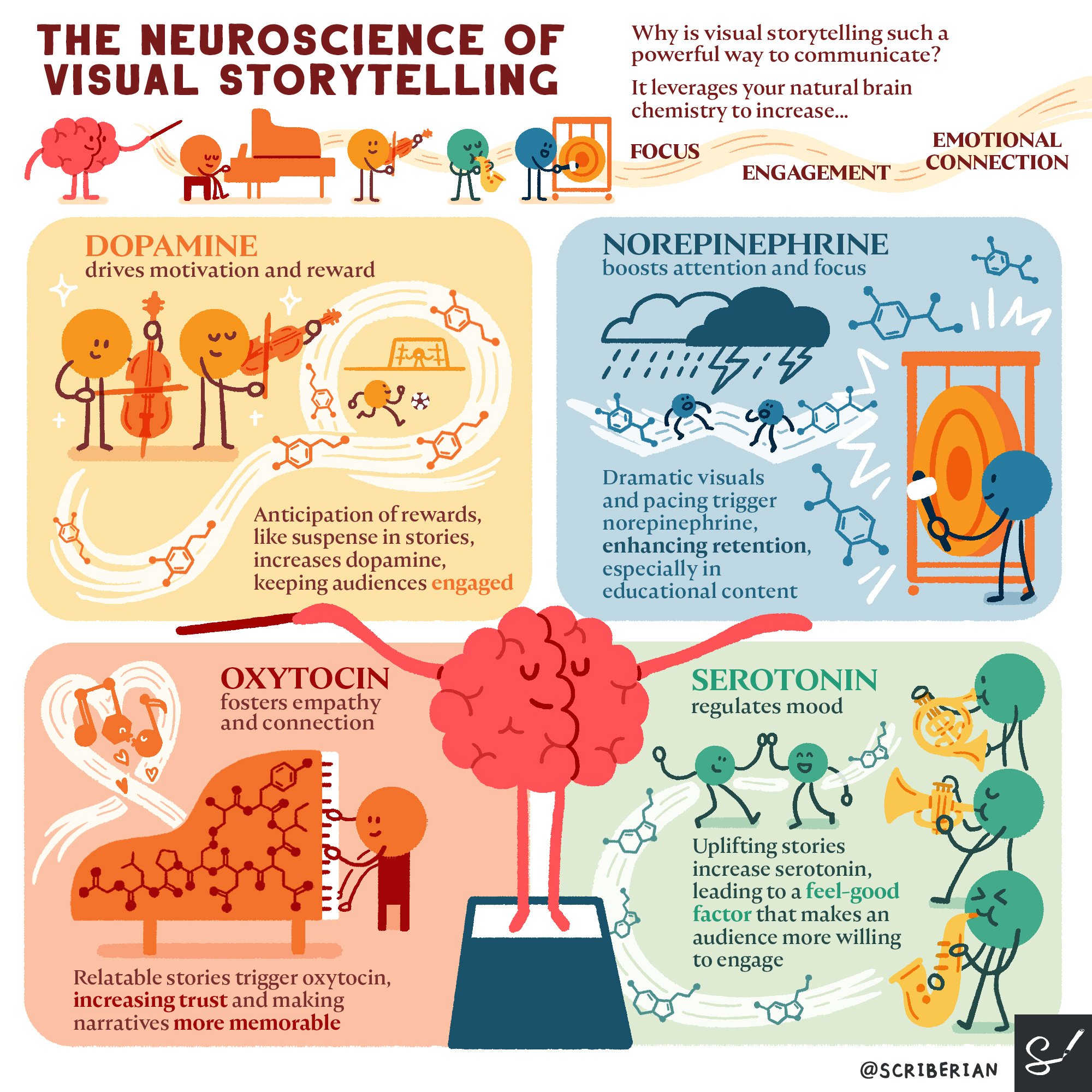
Dopamine is a neurotransmitter associated with pleasure, reward and motivation. When we encounter something novel, exciting or emotionally significant, dopamine levels rise — reinforcing the experience and increasing our attention.
This is why a well-crafted visual story, with engaging imagery and a clear emotional arc, can captivate an audience so effectively. Research shows dopamine is released not only in response to rewards, but in anticipation of them. Suspense, cliffhangers and unresolved narratives keep the brain’s reward system engaged, driving attention forward.
Visually, this anticipation can be heightened through composition, colour contrast and framing — techniques that create momentum and expectation.
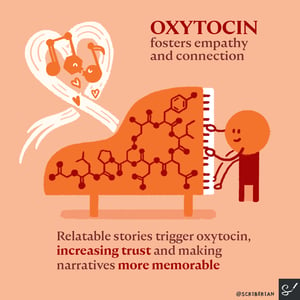
Oxytocin — often called the “love hormone” — plays a critical role in trust, bonding and empathy. When we experience a story with relatable characters and emotional depth, oxytocin is released, making us more likely to care about and remember what we’ve seen.
Visual storytelling amplifies this effect. Facial expressions, body language, colour palettes and lighting all deepen emotional engagement. This is why organisations that combine strong narratives with evocative imagery tend to create more meaningful and lasting connections.
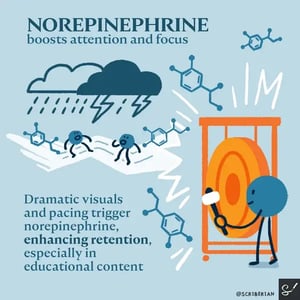
Norepinephrine enhances alertness, focus and memory retention. It’s released when the brain perceives urgency, challenge or emotional intensity.
Stories that include tension, conflict or surprise stimulate norepinephrine, keeping audiences engaged. Visually, this might show up through bold contrasts, unexpected juxtapositions or shifts in perspective — the same techniques used in film, advertising and live illustration to sustain attention.
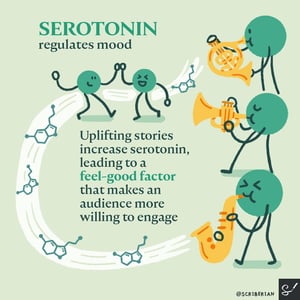
Serotonin helps regulate mood and well-being. Positive or inspiring stories increase serotonin levels, leading to feelings of satisfaction and optimism.
In visual storytelling, this effect can be reinforced through harmonious colour schemes, balanced layouts and imagery that evokes calm, warmth or nostalgia. These cues help messages feel trustworthy, reassuring and memorable.
What makes visual storytelling so powerful is the way these neurochemicals work together. A strong narrative activates dopamine through anticipation, oxytocin through emotional connection, norepinephrine through attention and serotonin through meaning and positivity.
By layering visual elements on top of story, we create an immersive experience that engages the brain on multiple levels — something words alone rarely achieve.
In the workplace, visual storytelling can align teams and build belief in a shared direction. Leaders who communicate vision visually tap into dopamine-driven motivation and oxytocin-fuelled trust, while urgency and relevance maintain focus.
The same principles apply to marketing, education and public engagement. Whether through infographics, animation or live illustration, visual storytelling boosts understanding, retention and emotional impact.
If we want messages to be heard, remembered and acted upon, we need to harness not just storytelling — but visual storytelling — to maximise the brain’s chemical returns.