Seeing the bigger picture
HMPPS Digital had a huge task in modernising the prison and probation service. The first step was creating a vision behind which everyone could align.
Every leader talks about their vision. But how many have actually made it visual?
We often find there's a gap between people's instinctive understanding of the power of pictures and their willingness to use them when it really matters.
And yet, in moments of crisis, we instinctively turn to visuals. Emergency procedures, evacuation plans, public health campaigns and safety instructions all rely on pictures because, when clarity and alignment are critical, words alone aren't enough.
The reality is, you don't have to wait for a crisis to benefit from visual thinking.
Over the past 15 years, Scriberia has helped organisations across local and national government, the NHS and the wider public sector articulate complex strategies, programmes and systems through visual communication.
When we founded Scriberia, we believed large organisations urgently needed clearer, more effective ways to think, work and communicate. That belief has only grown stronger.
In the public sector especially, scale and complexity are constant companions. Multiple stakeholders, competing priorities and long delivery times can make even the best strategies difficult to communicate and implement.
That's why we don't just create visuals at the end of a project. We use them to help shape thinking from the very beginning.
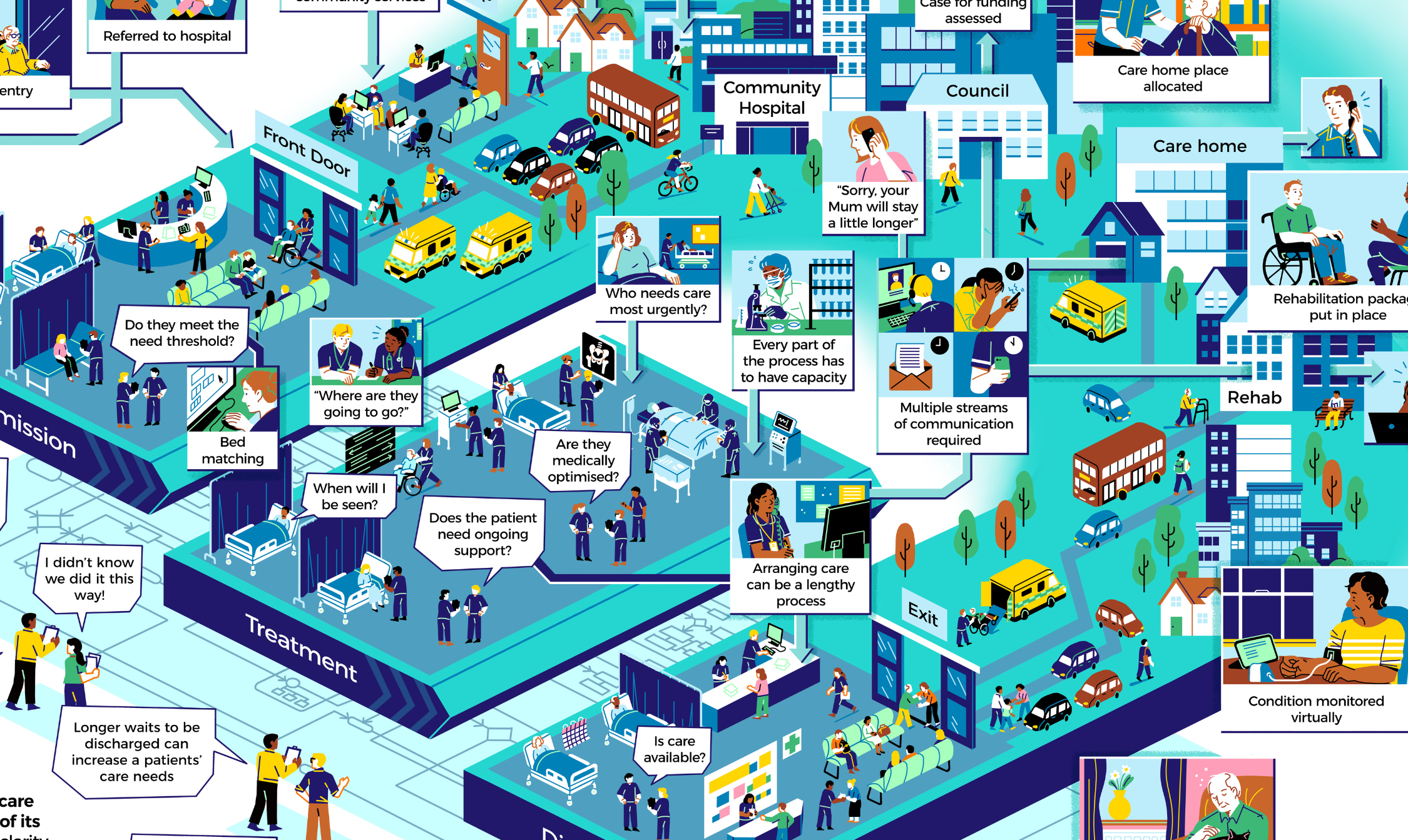
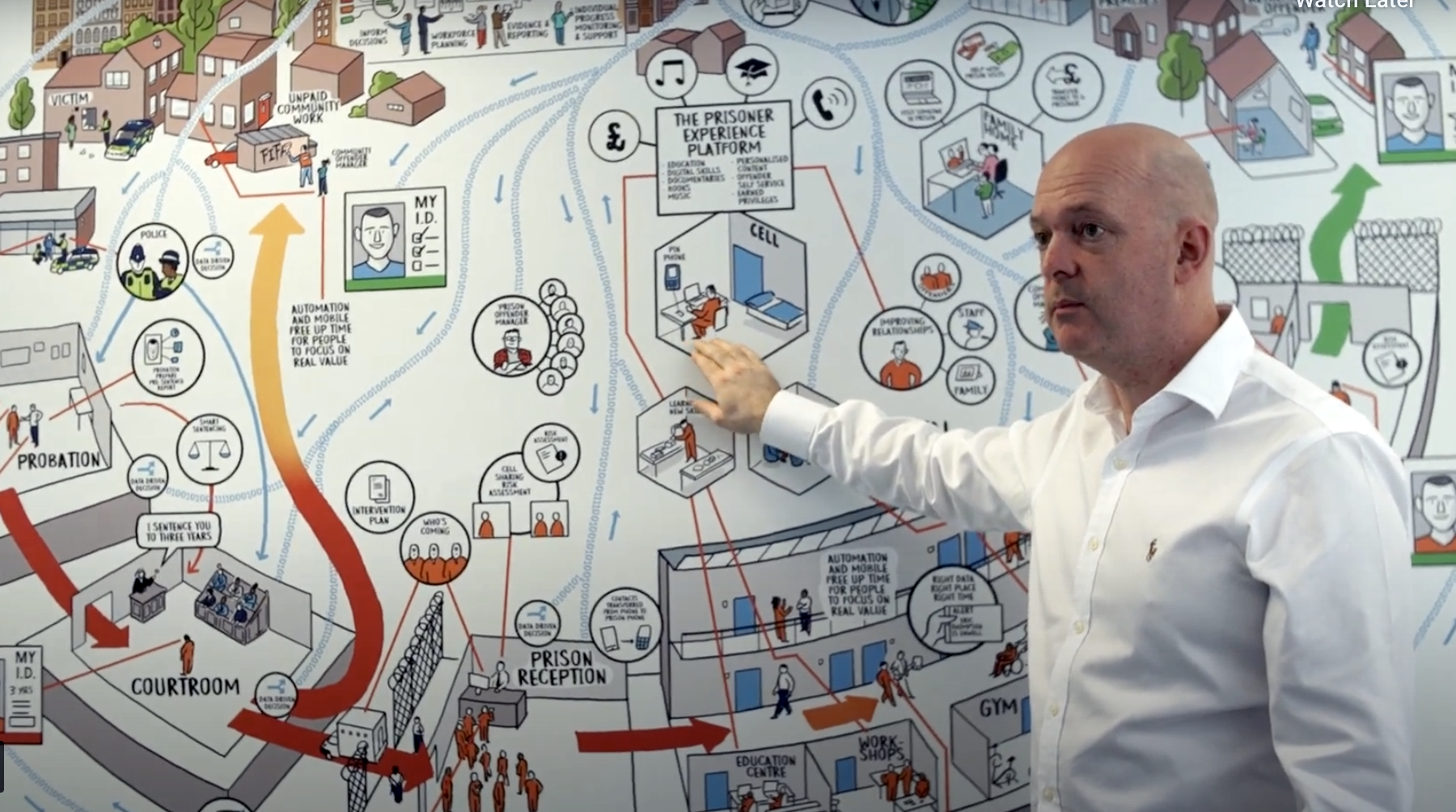
We call this approach vision mapping. Despite the name, it's much more than producing an illustration. It's a collaborative process that helps teams develop a shared understanding of where they're going and how they'll get there.
Through a series of structured workshops, we help stakeholders build a single visual representation of their programme, creating alignment long before implementation begins.
We've used this approach to map everything from the Army's operating model and the digital transformation of His Majesty's Prison and Probation Service to DEFRA's biosecurity strategy at the UK's borders.
Occasionally we're met with understandable scepticism. Can a picture really capture something this complicated?
The answer lies in balance.
Our aim isn't to oversimplify. It's to create clarity. Every vision map, infographic or animation needs enough substance to answer real questions without becoming overwhelmed by detail.
A successful visual becomes a shared reference point — a place where different audiences can begin with the same overarching story before exploring the level of detail that's relevant to them.
Increasingly, these visual assets become interactive knowledge hubs. Clickable elements reveal supporting videos, live data, progress updates, FAQs and technical documentation, allowing people to explore information at their own pace while remaining anchored to the same strategic vision.
Rather than replacing detailed documentation, visual communication provides the framework that helps people navigate it.
Engagement and understanding are essential to the successful delivery of any strategy. That's why we often combine vision maps with animated explainers, infographics and interactive content.
Together, they help organisations communicate consistent messages across large, distributed workforces — building understanding, maintaining momentum and ensuring that everyone can see how their work contributes to the bigger picture.