Our guide: Visual communication for change
How we make visions visual and transformation easy.
Only 12 per cent of transformation projects fully achieve their stated goals. That number should stop us in our tracks. After all the planning, the consultants, the town halls, the decks — only one in eight transformations actually lands.
In our work with organisations going through change, we see the same pattern again and again: the strategy is sound, but the communication of it is broken. People don't understand it. They don't see themselves in it. And so they don't believe in it.
Most change communication fails for a simple reason: it's designed to inform, not to connect. Decisions are made behind closed doors, packaged into strategy documents and slide decks, then cascaded down through the organisation. Employees receive the output of a process they had no part in — and they feel it.
When people feel excluded from change, three things happen. They don't understand it. They don't trust it. And they don't act on it. This isn't resistance for its own sake — it's a rational response to feeling disregarded. Employees aren't cogs in a machine. They're individuals with distinct needs, perspectives and experiences. And when the communication treats them otherwise, the transformation pays the price.
Humanising change means starting from a different premise: that employees aren't passive recipients of a strategy, they're the people who have to make it real. For that to happen, they need three things.
When those three things are present, change stops feeling imposed and starts feeling shared. That shift — subtle as it sounds — is the difference between a transformation that gets delivered and one that gets lived.
Future states are inherently difficult to grasp. You're asking people to connect with a reality that doesn't yet exist — new ways of working, new team structures, new relationships between parts of the business. The further that future feels from daily experience, the harder it is to make tangible.
The default communication toolkit — documents, slide decks, bullet points — is built for transferring information. It can describe a future state but it can't make people feel it. It explains the destination without giving anyone a sense of the journey. And in the absence of that felt understanding, people fill the gaps with anxiety, rumour and resistance. But the strategic use of visual communication is game-changing and here's why.
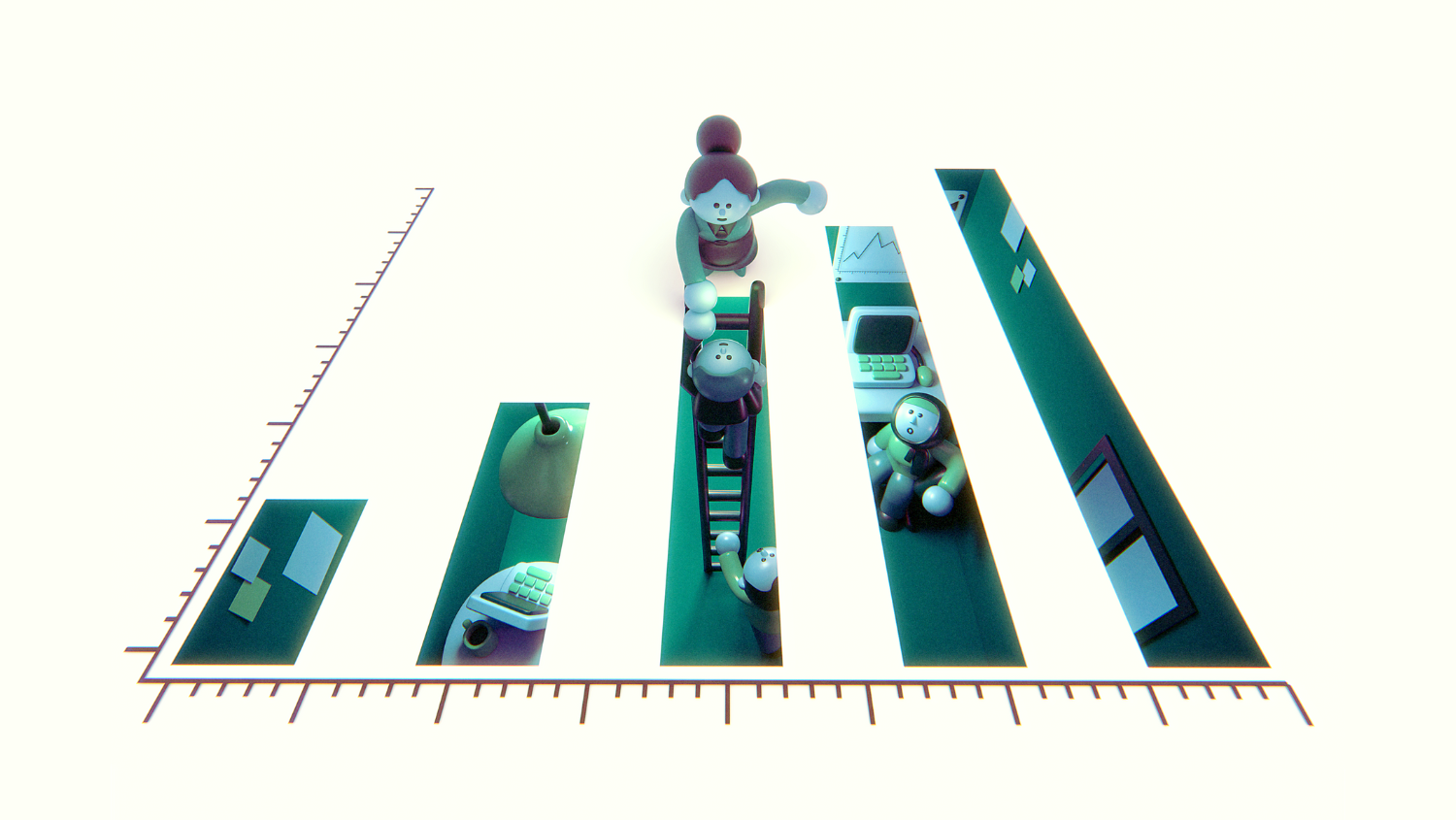
When people can see themselves reflected in the change, when their perspectives are heard and their questions answered, it builds empathy, engagement and a genuine connection to what’s ahead.
Chris Wilson, Scriberia
Visual storytelling works in change communication because it does something that words alone struggle to do: it makes the invisible visible and the intangible tangible. Abstract strategies become concrete. Future states become imaginable. The complex web of how teams, processes and technologies will connect becomes something people can actually navigate.
In practice, we see this working in three distinct ways.
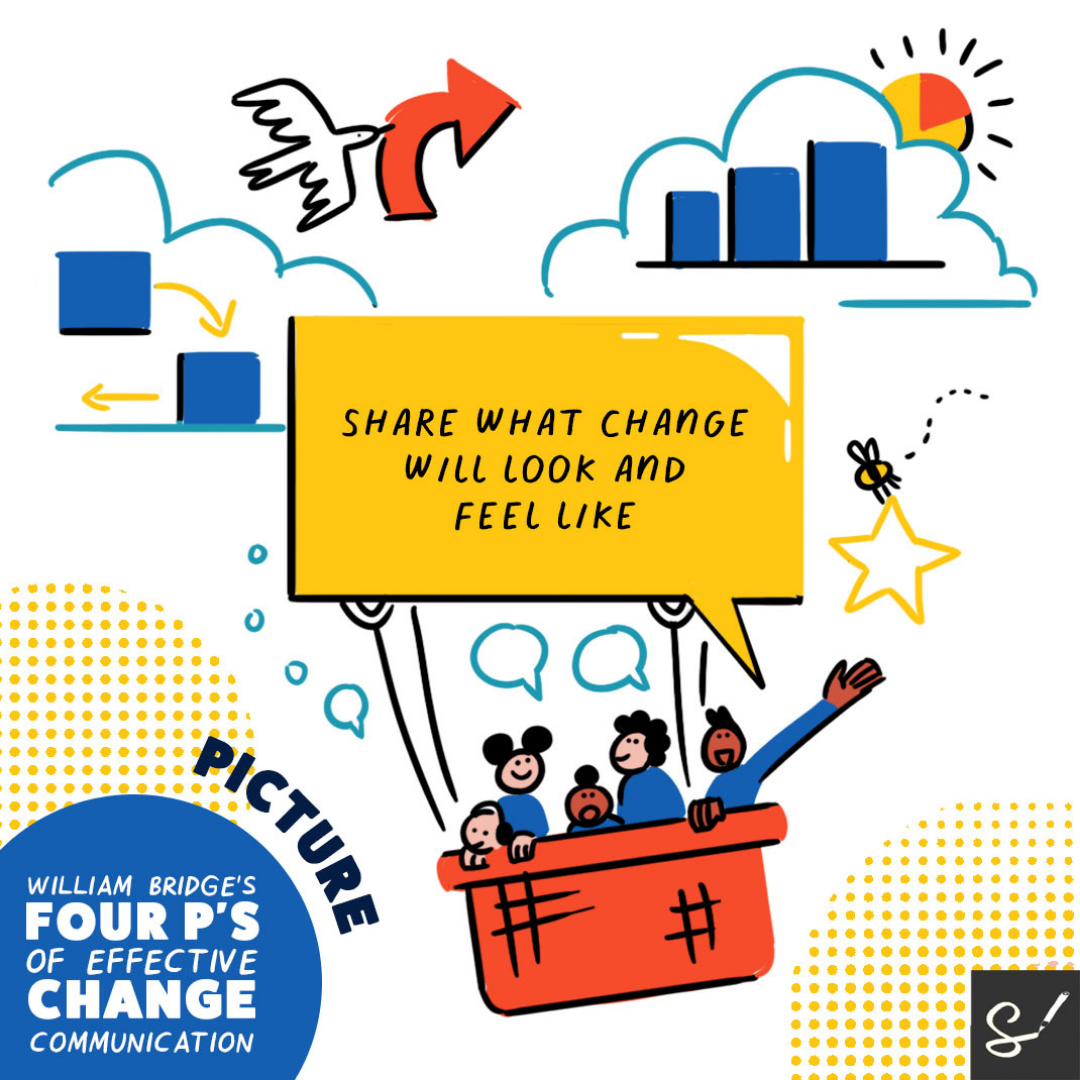
Making the future feel real. Illustrations, vision maps and animations let people see what the change actually looks like — not as a list of bullet points but as a world they can picture themselves in. That shift from abstract to tangible is where emotional connection begins.
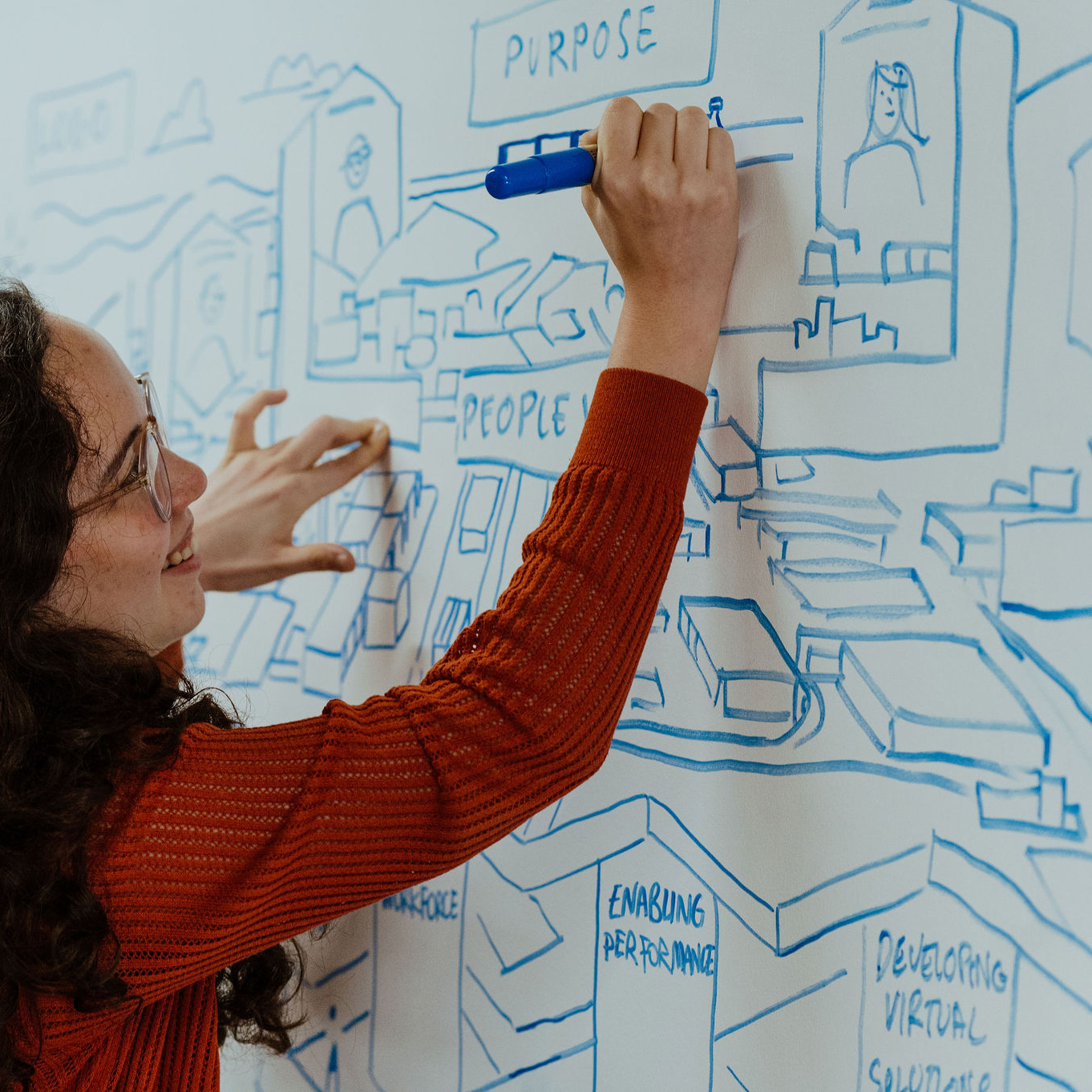
Creating ownership through co-creation. The most effective change visuals aren't produced and then presented to employees — they're developed with stakeholders throughout the process. When people contribute to shaping the story, they invest in it. We worked with a government client who fully embraced this approach, using the creation of visuals as an opportunity to bring leadership voices around the table — not as the authority, but as one voice among many. The result was genuine alignment, not just acknowledged messaging.
Speaking to emotion as well as intellect. People don't commit to change because they've processed a logical argument. They commit because they feel something. A well-crafted visual story reaches the parts of people that strategy documents never reach.
When people can see themselves reflected in the change — when their perspectives are heard and their questions answered — it builds empathy, engagement and a genuine connection to what's ahead.
Successful change isn’t just about new structures or strategies — it’s about how those things land with the people expected to make them work. When people can see themselves reflected in the change, when their perspectives are heard and their questions answered, it builds empathy, engagement and a genuine connection to what’s ahead. This is humanising change.
A successful change story isn’t told to employees — it’s built with them. The process of creating visuals, from rough drafts to finalised imagery, provides opportunities to involve stakeholders in shaping the narrative. This creates a sense of ownership and removes the hierarchical distance that so often derails transformations.
One of our government clients fully embraced this collaborative approach, using visuals to engage stakeholders at every stage. By treating leadership as a voice around the table, not the voice, they broke down barriers, fostered alignment and ensured real ownership of the change.
Ultimately, charts, slides and documents don’t drive transformation. People do. And when people feel heard, see their role clearly and connect emotionally with the journey, change becomes real.
Think back. When was the last time an endless list of bullet points truly inspired you? Visual stories — whether animations, vision maps or illustrations — take strategies from static to dynamic. They achieve what slides and charts can’t, speaking to people’s intellect and their emotions.
We realised a visual approach would be a much more powerful way to get everyone onboard and talk them through all the complex intersections of issues and show them how they fit into it all.
Felix Holman, Head of Programmes, World Animal Protection
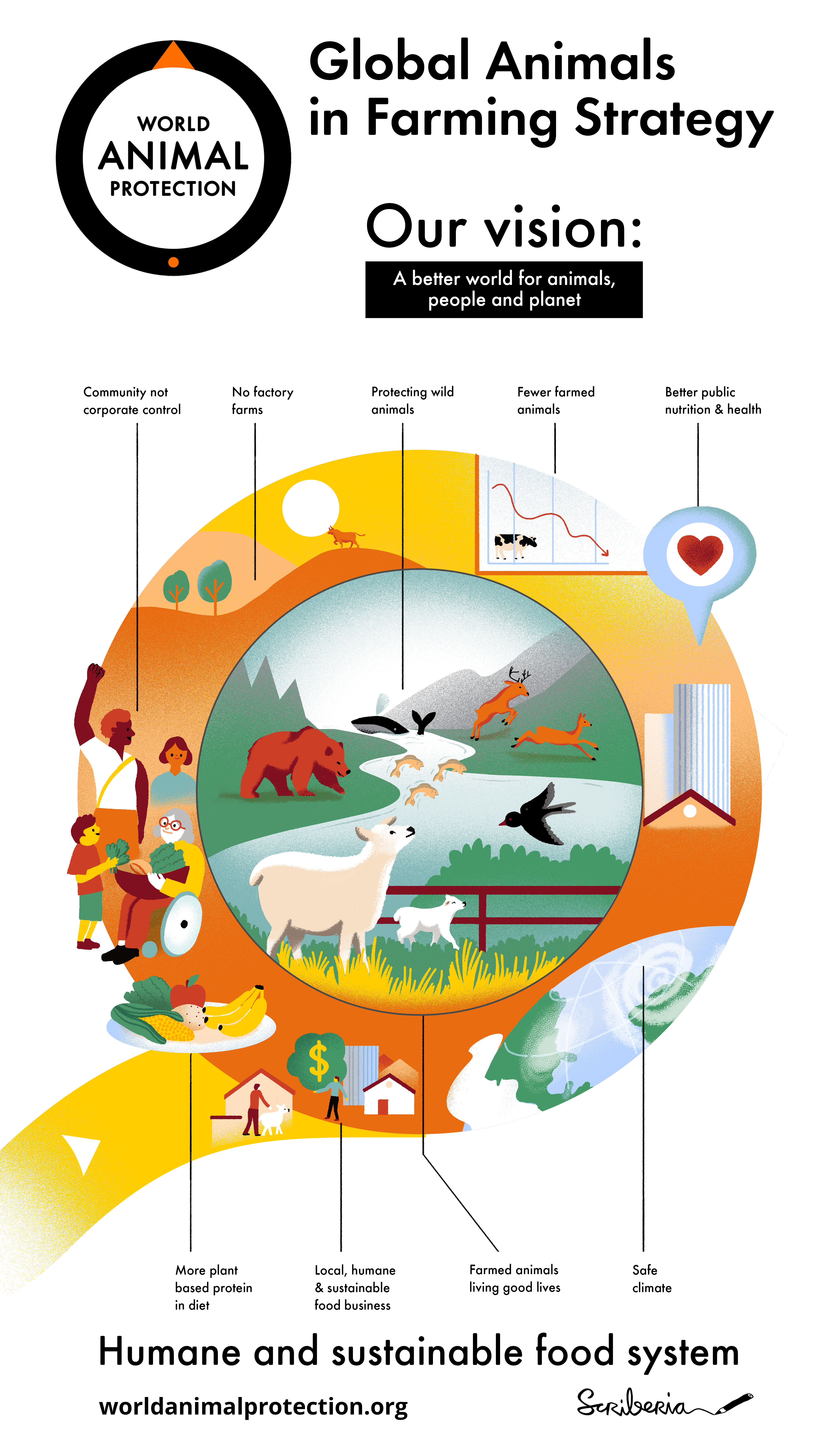
Faced with communicating an ambitious 10-year global strategy to a diverse international stakeholder group, World Animal Protection chose to map their vision visually rather than rely on written documents.
As their Head of Programmes, Felix Holman, explains, “We realised a visual approach would be a much more powerful way to get everyone onboard and talk them through all the complex intersections of issues and show them how they fit into it all.”
By mapping their vision visually, they crafted a tool for long-term alignment and engagement. You can read their story here.
It's a pattern we see consistently. The organisations that navigate change most successfully are the ones that invest in making that strategy visible, human and shared.