Scriberia Academy
Empower yourself to use drawing as a tool for strategic thinking and communication.
Roman Schoeneboom is a UX Design Systems Lead at a global wealth management company, based in Zurich, and a recent graduate of Scriberia's Visual Thinking Diploma.
In his work, Roman helps teams explore complex challenges, understand user experiences and make better decisions together. Drawing, he has discovered, is one of the simplest and most effective ways to do that.
"I'm a UX Design Systems Lead and, in reality, it's a hybrid role," says Roman. "I support my team with projects and feasibility studies, and I plan and facilitate design thinking workshops."
Early in his role, Roman worked with an HR team to explore how easy — or difficult — it was for candidates to apply for jobs at the bank. Almost immediately, he found himself reaching for visual tools.
"I was using visual metaphors and visual maps — service blueprints, customer journey maps — to help people understand the situation from the customer and business perspective."
By mapping the process visually, Roman could show where the gaps were, where communication with candidates was breaking down and how those moments affected the emotional journey.
For him, that is the real power of visual thinking: it makes invisible experiences visible.
Drawing allows ideas to move quickly out of your head and onto a whiteboard or piece of paper, where everyone can see them.
"Then you get everyone gathered around and quickly aligned because they can see what you mean and give you feedback on it," says Roman.
That shared visibility makes conversations clearer, faster and more useful — especially in large organisations, where complexity can easily slow things down.
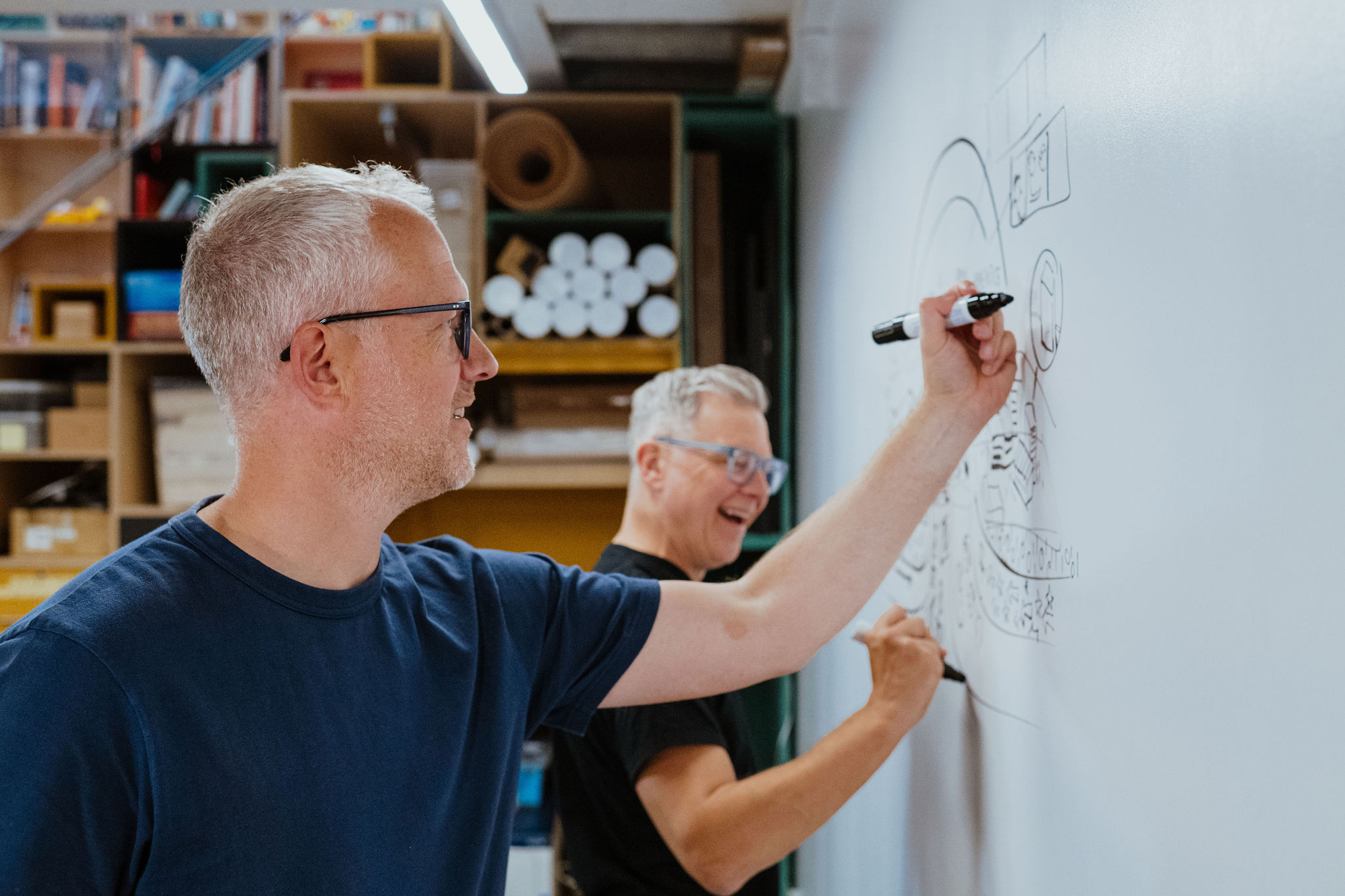
"When I'm working with colleagues, trying to get to grips with their challenges, I say: what would help me is if you can draw this out. Draw out your thoughts. Draw a little bit of the process. Make very simplistic boxes."
You don't have to be Michelangelo to convey meaning. Through drawing, you can connect really quickly with people.
Roman Schoeneboom, UX Design Systems Lead
Roman sees particular value in visual thinking as an antidote to what he calls "meeting mania": the cycle of back-to-back conversations that generate plenty of discussion, but not always much shared understanding.
"People come in with agendas, everybody is talking, but if you ask them how much they have really captured, or how aligned they are, you'll often find it's a very low percentage. They need another meeting just to align."
Visualising the conversation changes the dynamic. Instead of ideas disappearing into the air, they become something people can point to, question, build on and improve.
"By drawing and visualising exactly what we're talking about, you get people to give input straight away. Within a short amount of time, you'll gather different opinions, and that leads to a conversation about what we need to agree on."
For Roman, drawing creates a more controlled, more positive and more productive way to work through complexity.
"That's why I use visual thinking. It's why it's so important in a business context. You can invite people into your world."
Roman joined Scriberia's Visual Thinking Diploma wanting to strengthen his ability to communicate through drawing. His biggest takeaway was the importance of simplification.
"I tend to overthink and overcomplicate," he says. "The course helped me ask: what are the essential elements I want to communicate, and how do I arrange them?"
The Diploma helped Roman think more deliberately about structure, layout and audience. It gave him practical ways to organise information so that people could understand it quickly and act on it.
"That thought process — how you structure the page and align the content to make it simple and easy for your audience to pick up — was number one for me."
Roman is clear that the Diploma is not just for people who already think of themselves as visual.
"If you like drawing and you want to get better at it, the Diploma is for you. And if you don't draw at all, but you want to, the Diploma is for you too. Just jump in."
Across six weeks, participants are guided through structured, practical sessions designed to build confidence and apply visual thinking directly to real work.
"They take you through really well-structured, well-facilitated sessions where you learn a lot, and where you can apply most of these abilities and methods straight away to your day-to-day work."
For Roman, the course was not only useful, but energising.
"All of the sessions were great, the exercises were great. It really got my heart pumping. It was a lot of fun."
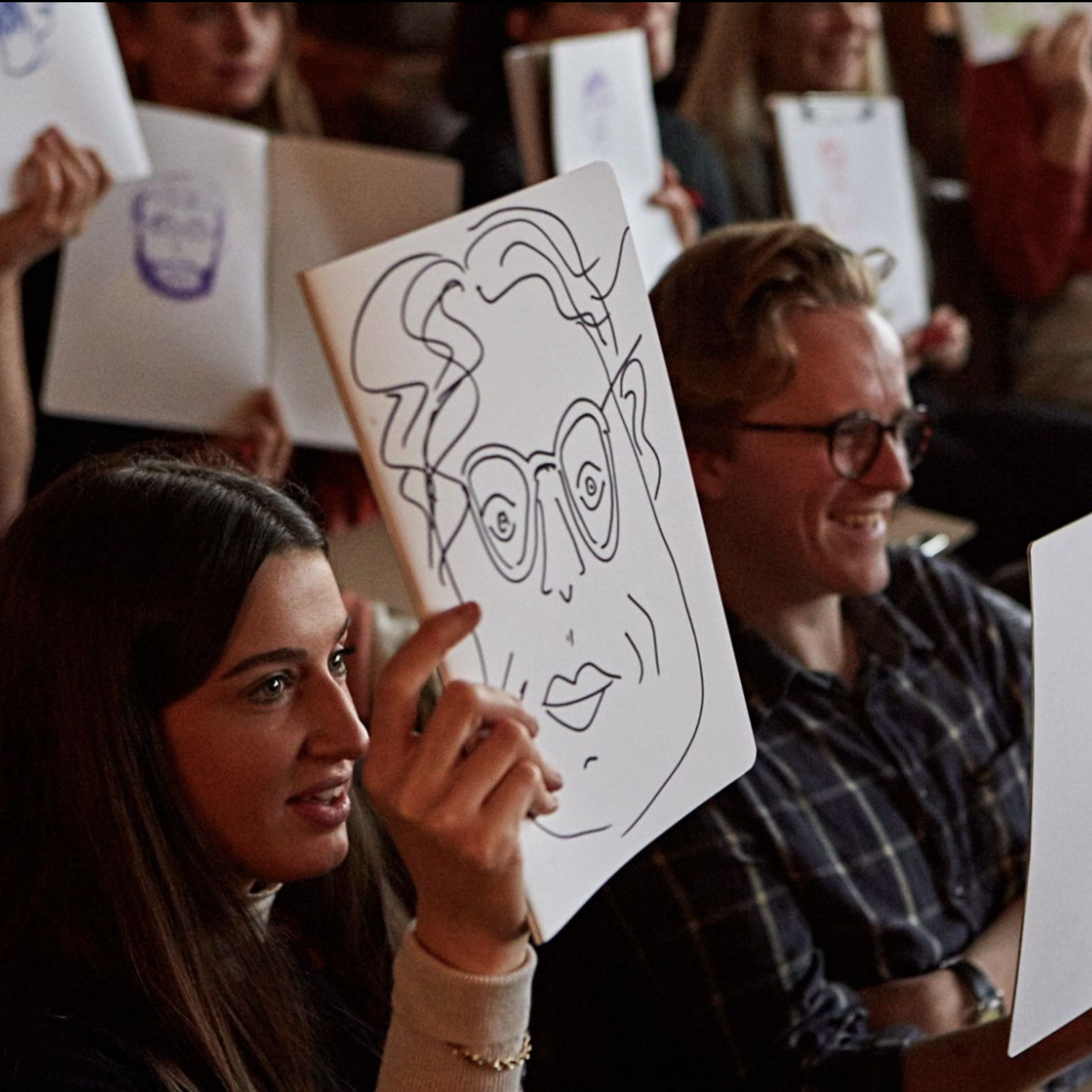
He also valued the sense of community within the cohort: the opportunity to share work, receive feedback, learn from others and brainstorm collectively.
"The resources after each session were amazing. A great course, brilliantly delivered. Really well done."